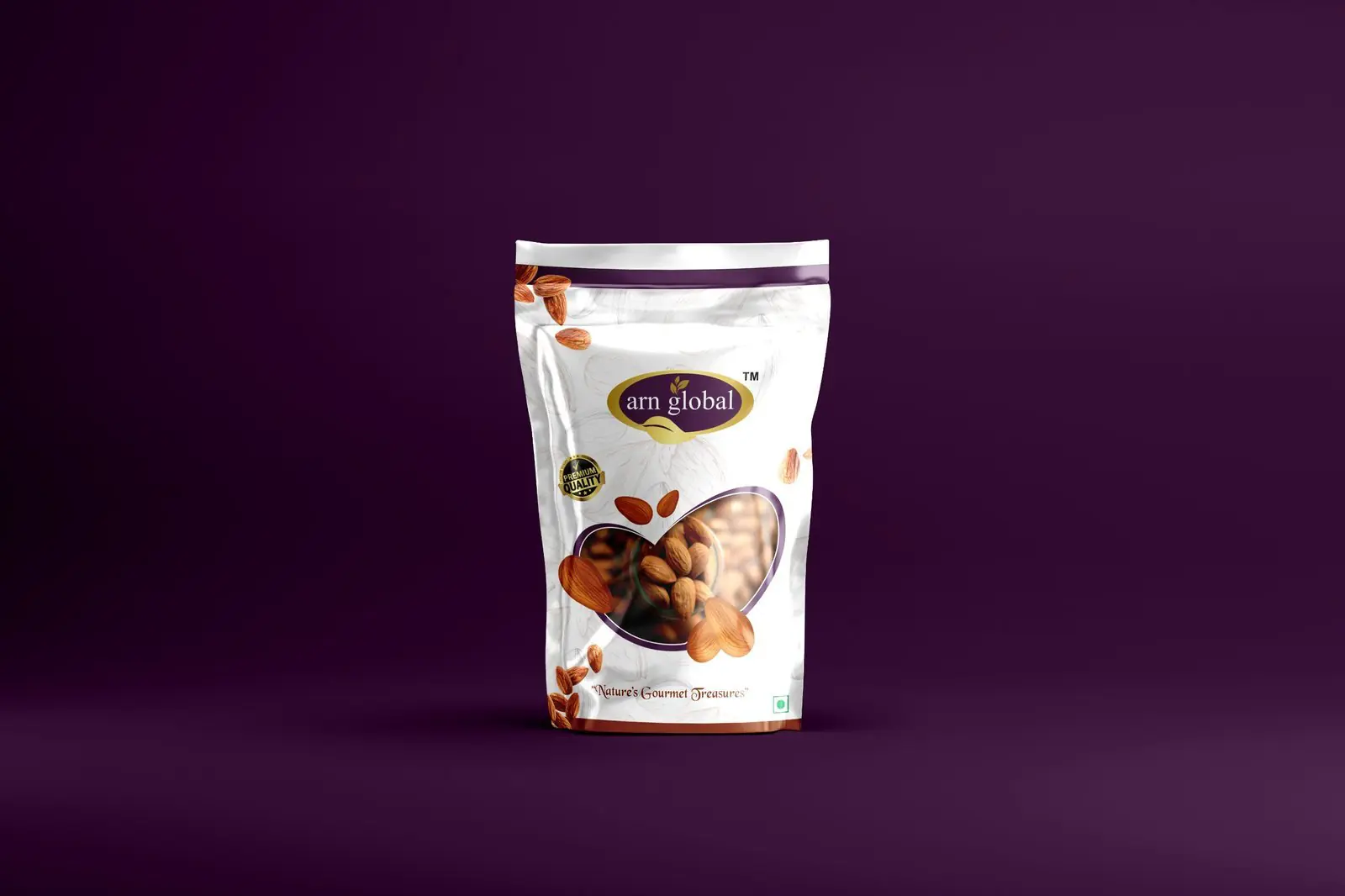
On a shelf or a marketplace listing, your packaging is your salesperson. It must stop the eye in a second, explain the product in five seconds and still follow every labelling rule. Here is how to design it properly.
Start with your customer and the shelf
Who buys the product, and where do they see it first: a store shelf, a gift hamper or a phone screen? Packaging for a gift needs to feel premium. Packaging for a grocery shelf needs to be readable from a distance.
Pick the right structure
- Stand-up pouch, with or without zip: popular for dry fruits, snacks, spices and powders.
- Three-side seal pouch: good for sachets and single-use items.
- Folding carton or box: suits cosmetics, gifting, electronics and premium products.
- Bottle, jar or tin label: wraps around a container and must follow its curve.
- Corrugated box: for shipping and e-commerce.
Understand the die-line
A die-line is the flat template of your pack, showing the cut lines, fold lines, seams and the area where artwork can safely go. Designing on the exact die-line from your printer or manufacturer prevents costly mistakes such as text cut by a fold or a logo hidden in a seal.
Build a clear visual hierarchy
- Brand name and logo.
- What the product is, in plain words.
- The main benefit or variant, such as flavour, size or type.
- Supporting details and symbols.
Use colour to separate variants within a range, and keep the layout consistent so customers can spot your family of products at a glance.
Do not forget the legal details
Packaged food in India must carry specific information on the label, such as the product name, ingredients, net quantity, manufacturer address, best-before or expiry, vegetarian or non-vegetarian symbol, nutrition information and the FSSAI licence number. Cosmetics and other categories have their own rules. Check the latest official requirements for your product category before finalising the design.
Material and finish matter
Matte laminate gives a premium feel, gloss increases colour punch and kraft paper suggests natural products. Special finishes such as spot UV or foil can lift a premium pack, but they add cost, so use them where they matter most.
Test with 3D mockups
A flat design can hide problems. Realistic 3D renders let you judge the pack from every side, see how it looks in a row with competitors and use the images for marketing before the first print run is ready.
Print checklist
- Artwork on the printer’s die-line, with bleed and safe margins.
- CMYK colours, plus any special spot colours agreed with the printer.
- 300 DPI images and vector logos.
- Proofing on the real material, because colours change on pouches and boxes.
Our packaging package includes the box, label or pouch design, realistic 3D renders, a logo, an intro video and print-ready die-line files.
Need packaging that stands out on the shelf?
Tell us about your business and our team will get back to you within one working day.
 Stationery Design
 Social Media Marketing
 Social Media Marketing